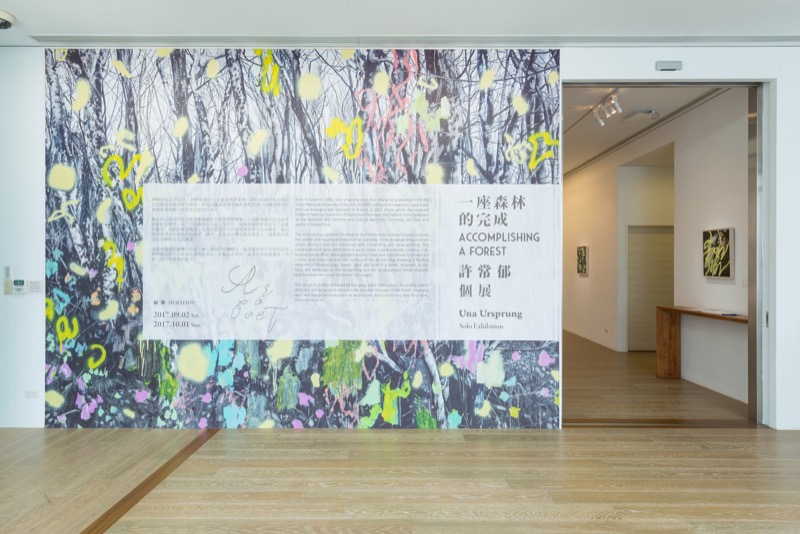
Accomplishing a Forest
Landscape has long been at the core of my practice, particularly forests and trees. For me, the forest is never a singular natural object, but a field that unfolds alongside lived experience. Each phase of forest imagery corresponds to a specific state of life and inner perception.
During my studies in Brittany, France, I painted forests that were quiet and imbued with a sense of mystery. After returning to Taiwan, my landscapes gradually shifted toward reflections on the past and projections of imagined futures, often carrying a more subjective and speculative quality.
In 2016, I settled in the Swiss countryside, where life became slower and more stable, allowing me to gradually merge with the surrounding environment. The forests from this period no longer refer to specific locations, but exist somewhere between memory and experience as a kind of generalized landscape. The imagery sheds explicit symbolism and narrative, moving instead toward a more neutral state of being.
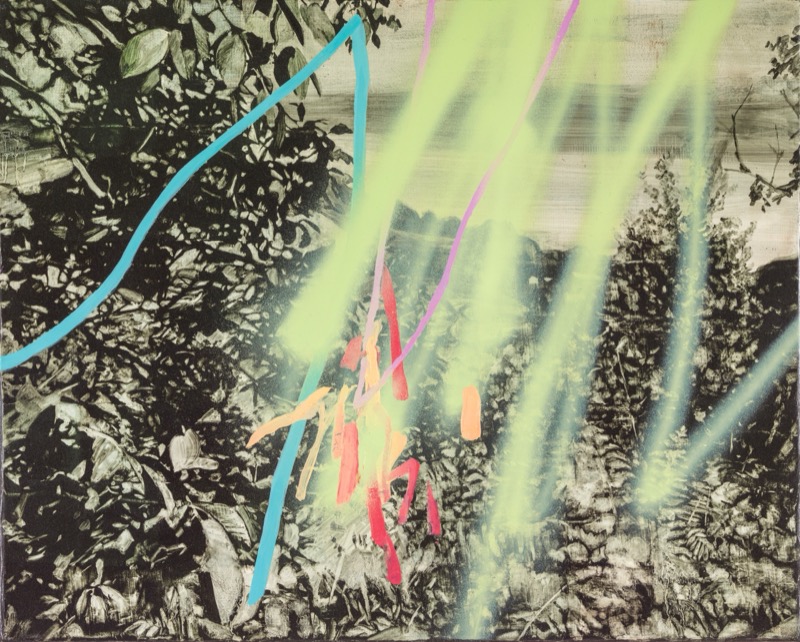
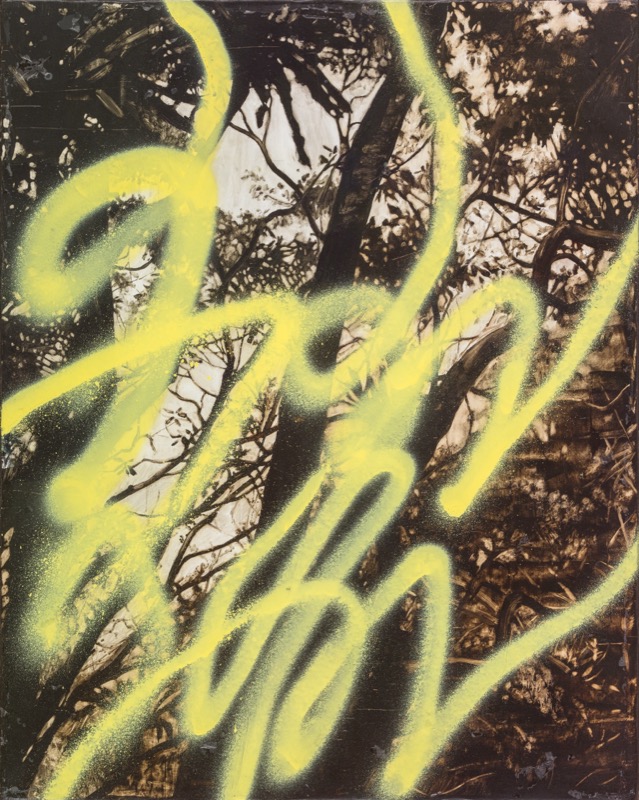
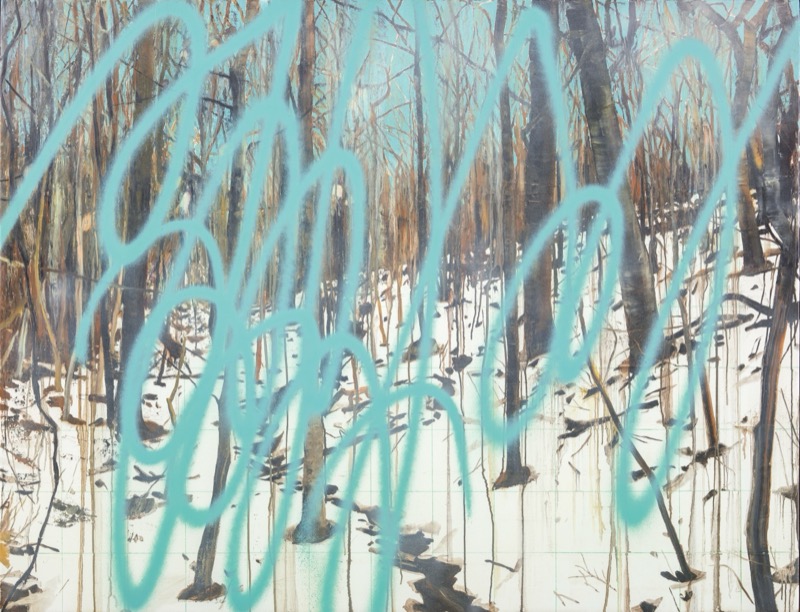
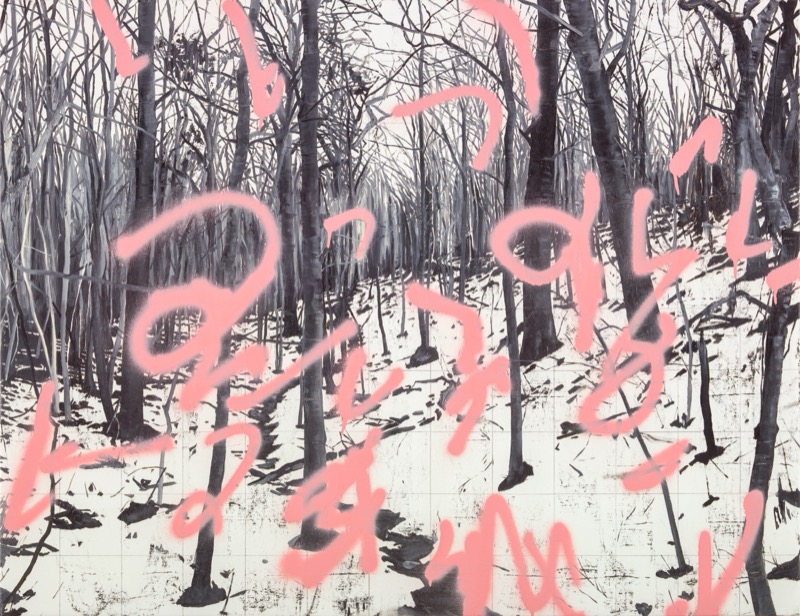
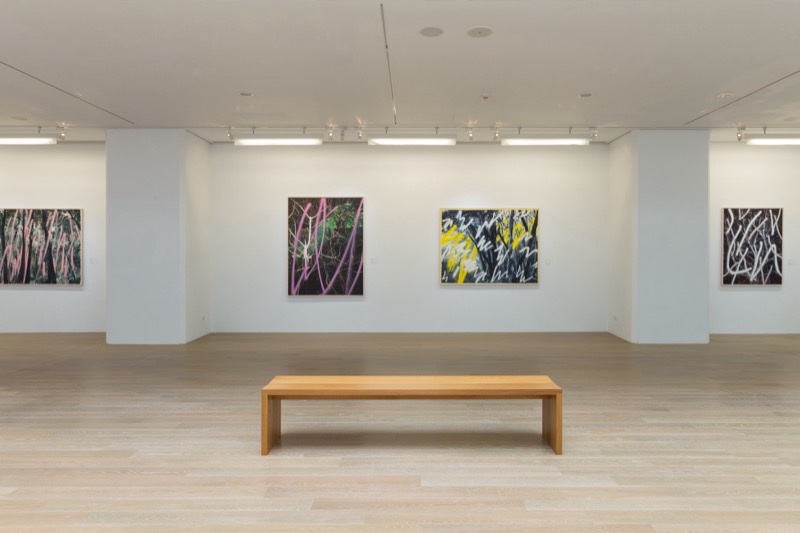
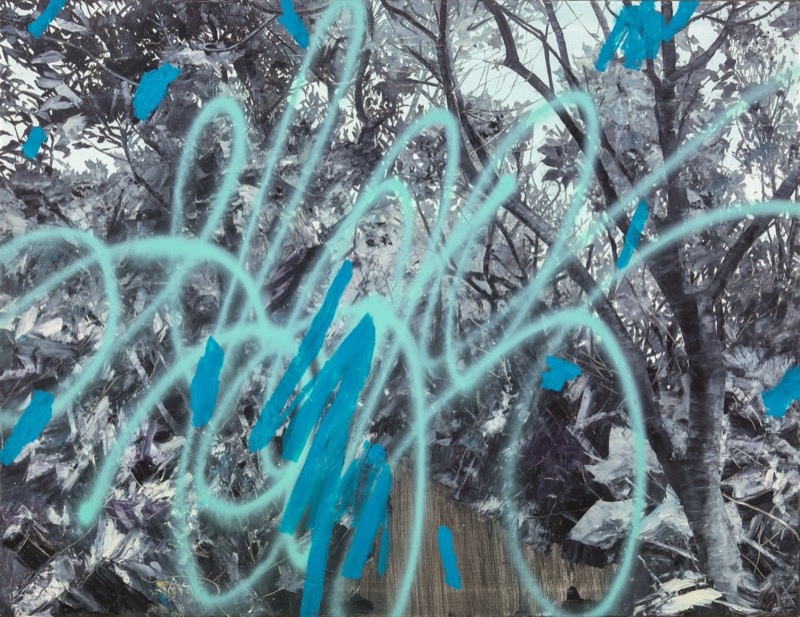
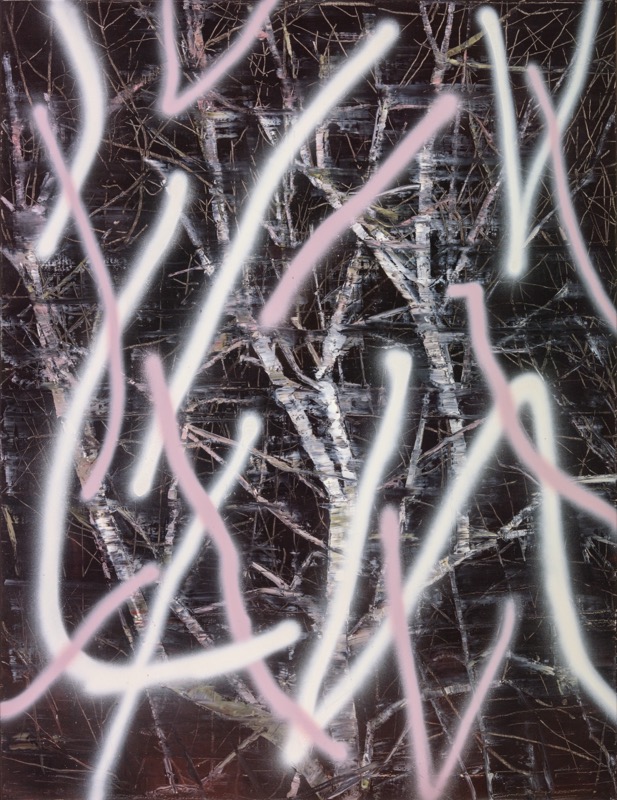
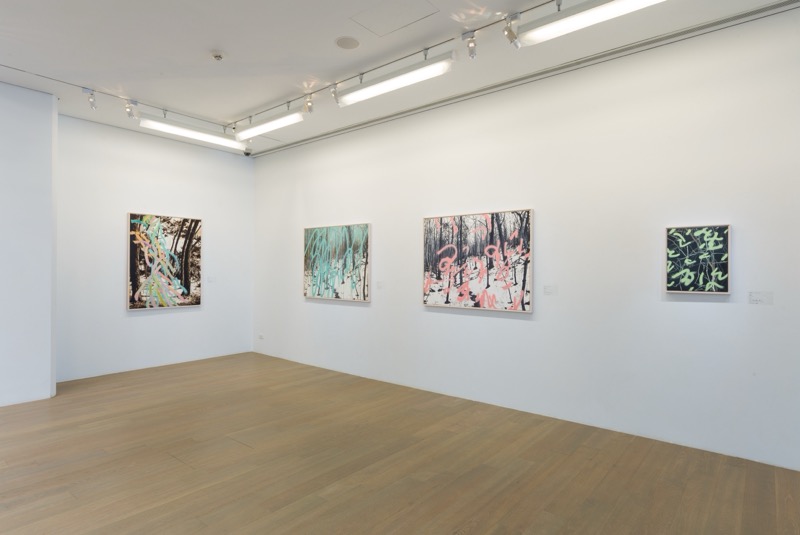
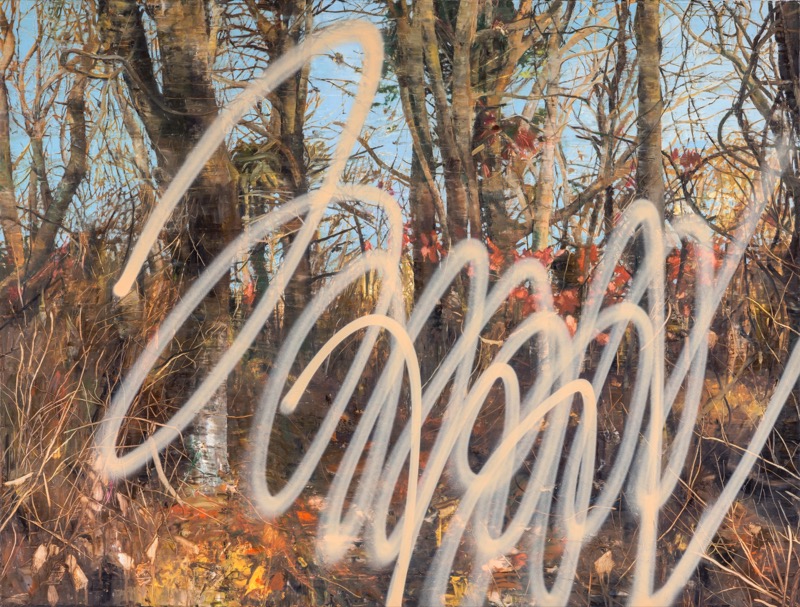
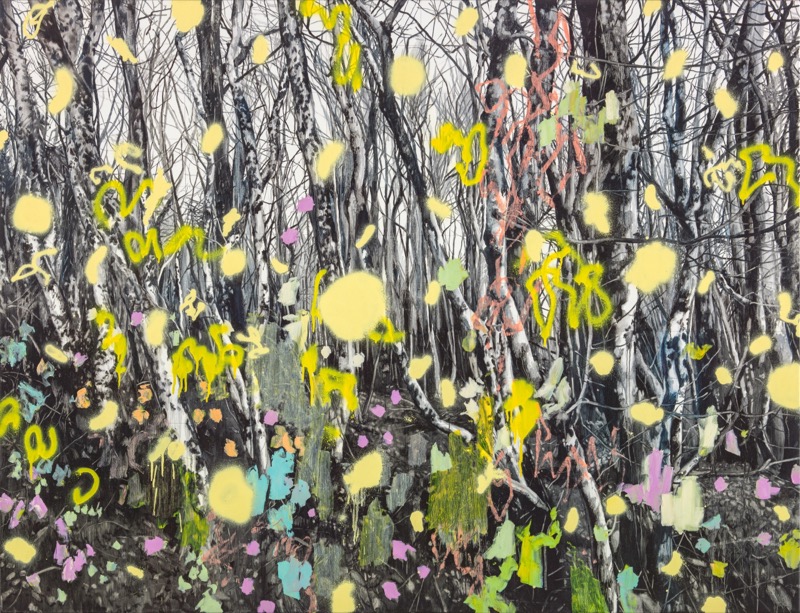
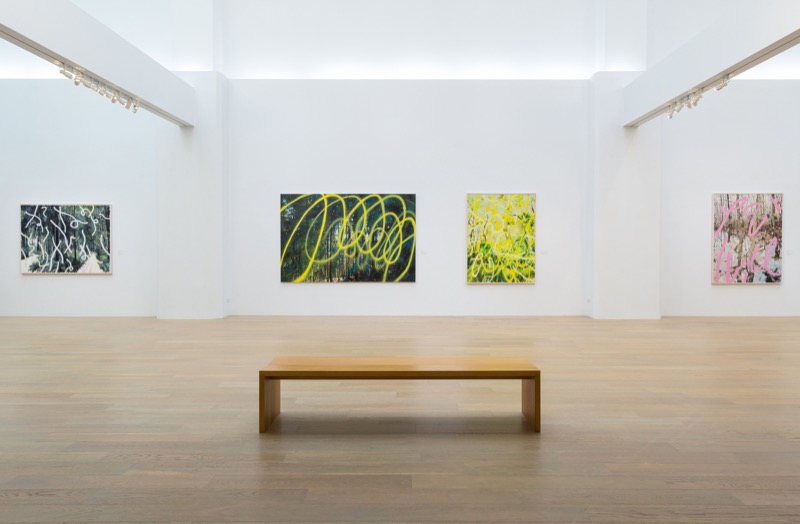
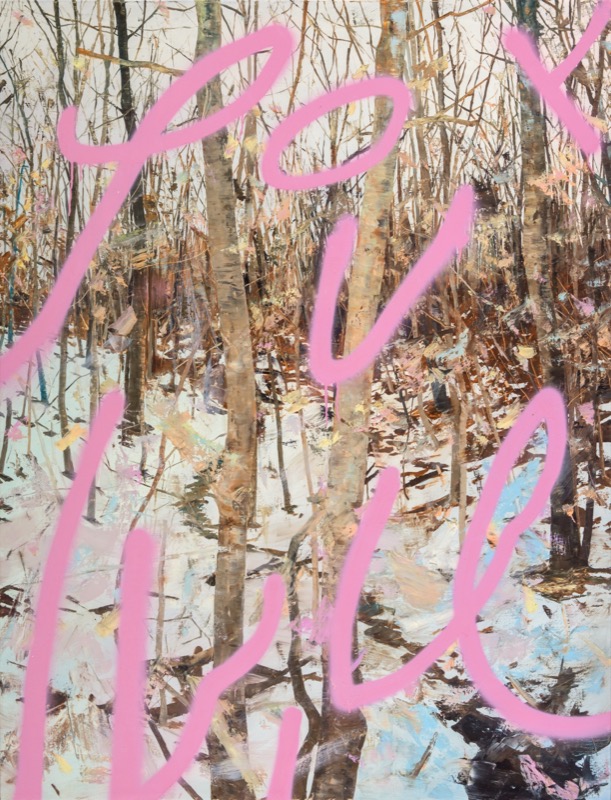
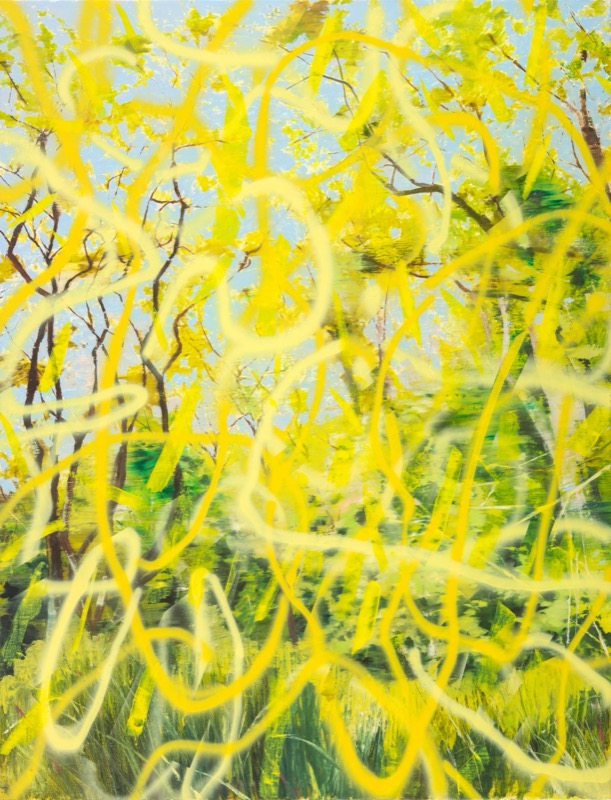
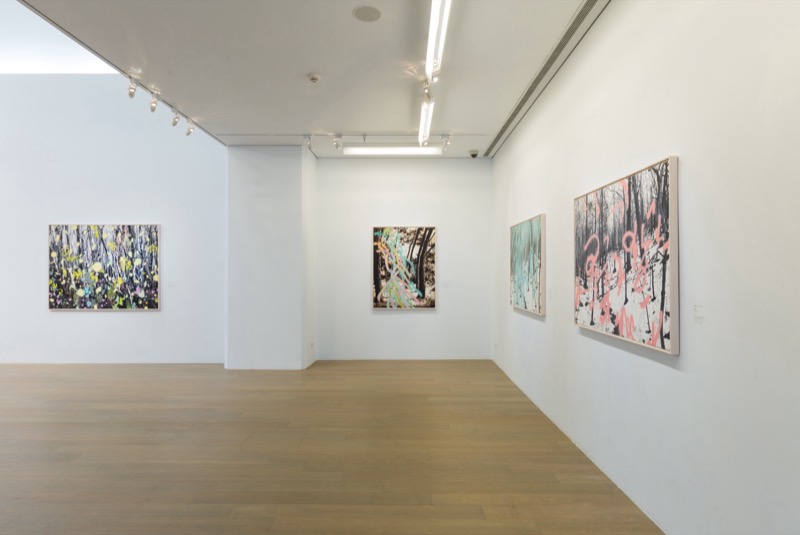
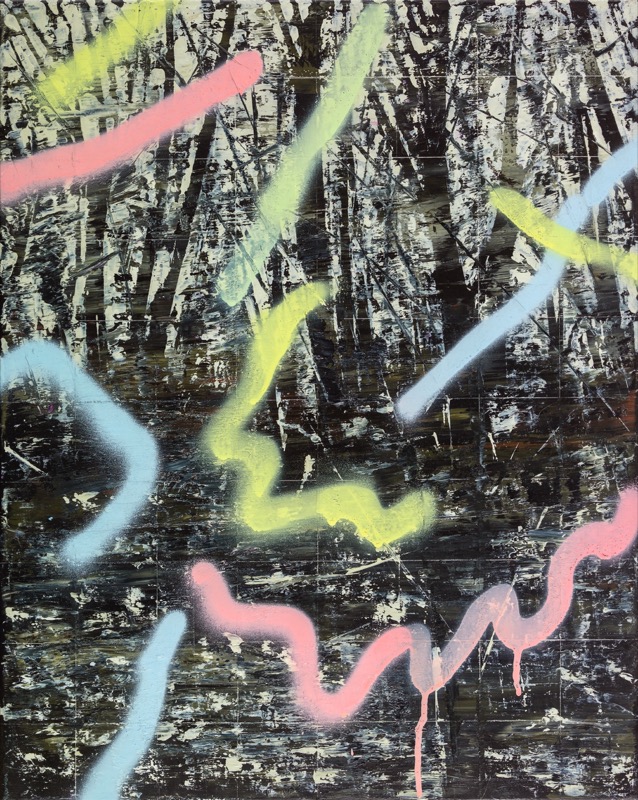
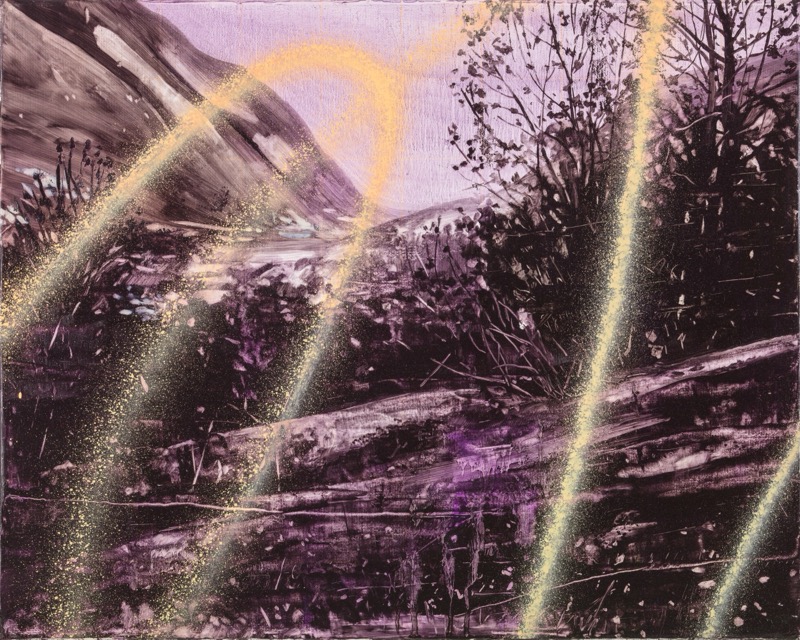
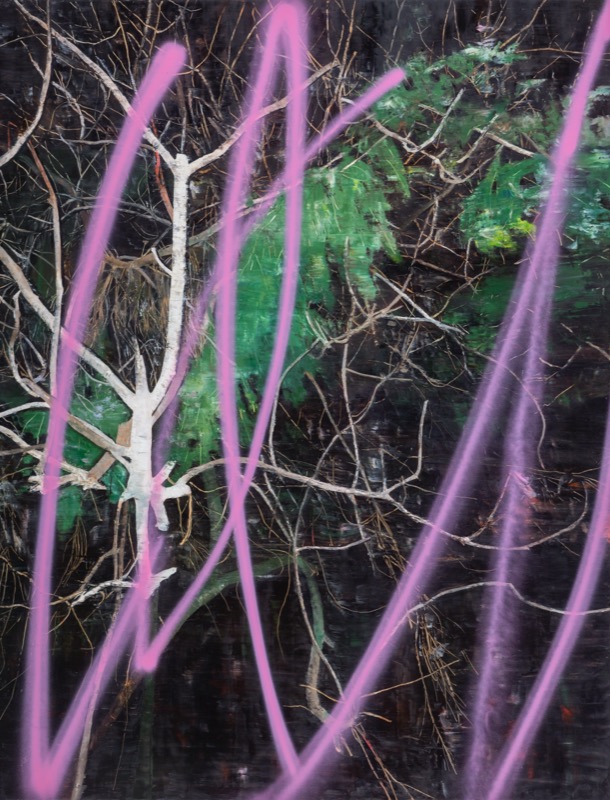
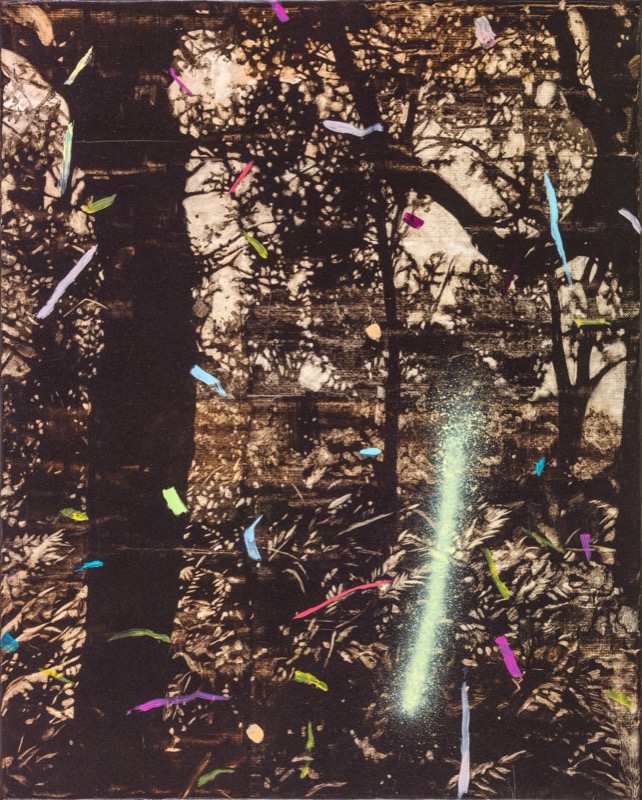
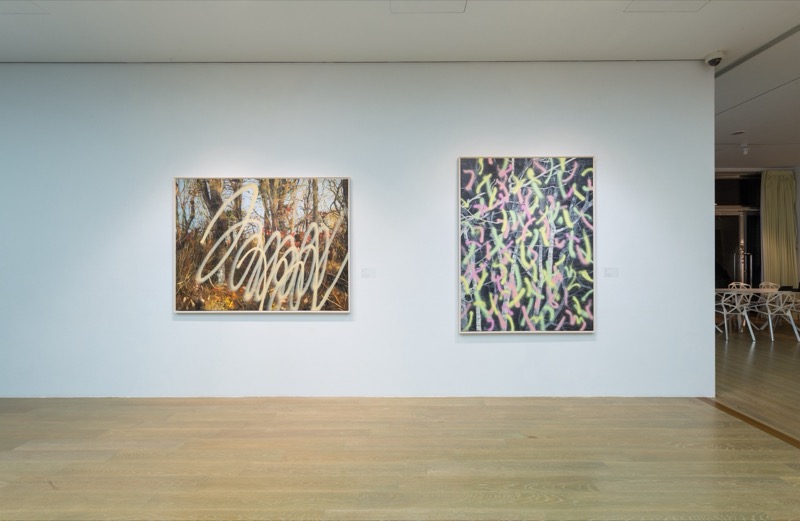
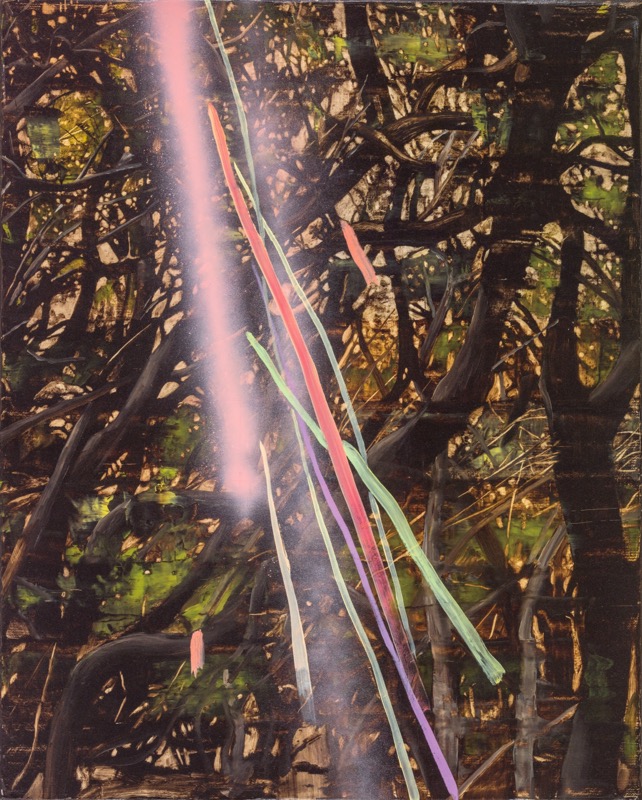
Within this transition, my focus shifted from what is depicted to how seeing and construction take place. I began working simultaneously with figurative landscape and abstract language, using the contrast of materials to open up new spatial possibilities in painting. Oil paint establishes the structure and depth of the landscape, while the subsequent intervention of abstract lines alters the rhythm of perception and the movement of air within the image.
The introduction of spray paint emerged from an intuitive experiment. As a more direct and rapid medium, it creates a clear tension in relation to oil painting. These seemingly random lines, color fields, or marks resembling fragments of writing hover in front of the image, like transient elements within a forest—light, dust, insects, drifting leaves—suspended within a single moment of time.
I am particularly drawn to this moment of intervention, when I act upon a landscape that appears already complete. Spray paint preserves the trace of gesture and bodily movement, circular motions, broken lines, extended trajectories, all of which quickly and irreversibly transform the space originally constructed through slow, deliberate brushwork. These marks seem to originate from another presence, introducing a different rhythm, desire, and mode of seeing, allowing multiple temporalities and layers to coexist within the image.
For this reason, applying spray paint onto an oil-painted landscape is not, for me, an act of destruction, but an act of completion. The forest is not constructed through representation alone, but gradually comes into being through continuous intervention and rewriting.